

Warehouses are under increasing pressure to process more orders, accommodate labour shortages and meet rising customer expectations for faster fulfilment. At the same time, supply chain leaders must balance productivity improvements with careful investment decisions.
Modern warehouse automation systems promise significant gains in throughput, inventory accuracy and operational resilience, but they encompass a wide range of technologies: from autonomous mobile robots (AMRs) and automated storage systems to conveyor networks and intelligent warehouse management software.
The challenge for buyers is understanding which technologies genuinely solve today’s operational problems and which are better suited to future expansion.
This guide explores the major categories of warehouse automation, how they integrate with existing operations and the key questions logistics teams should ask when comparing suppliers.
At a Glance: Warehouse Automation Systems
| Capability | What Buyers Should Compare |
|---|---|
| Robotics | AMRs, AGVs, robotic picking and pallet handling |
| Warehouse Management System (WMS) | Integration, visibility and workflow automation |
| Storage Automation | AS/RS systems, vertical lift modules and shuttle systems |
| Order Fulfilment | Picking accuracy, packing automation and throughput |
| Reporting | Productivity dashboards and operational analytics |
| Integration | ERP, transport management and inventory systems |
| Scalability | Ability to expand alongside business growth |
| Supplier Support | Installation, maintenance and training |
What Are Warehouse Automation Systems?
Warehouse automation systems combine software, robotics and mechanical equipment to automate repetitive warehouse activities that would otherwise require manual intervention.
These systems may automate:
- Goods receiving
- Inventory storage
- Picking
- Packing
- Internal transport
- Pallet movement
- Inventory counting
- Dispatch preparation
Automation is not simply about replacing people. For many organisations, it allows employees to focus on higher-value activities while reducing repetitive manual tasks and improving operational consistency.
According to Make UK (https://www.makeuk.org/), automation continues to play an increasingly important role in improving productivity and helping organisations address long-term labour shortages across manufacturing and logistics.
Warehouse Automation
The term warehouse automation covers a broad spectrum of technologies rather than a single solution.
Some organisations begin by automating one process, such as inventory management or goods-to-person picking. Others redesign entire distribution centres around highly automated workflows.
Common technologies include:
- Automated storage and retrieval systems (AS/RS)
- Autonomous Mobile Robots (AMRs)
- Automated Guided Vehicles (AGVs)
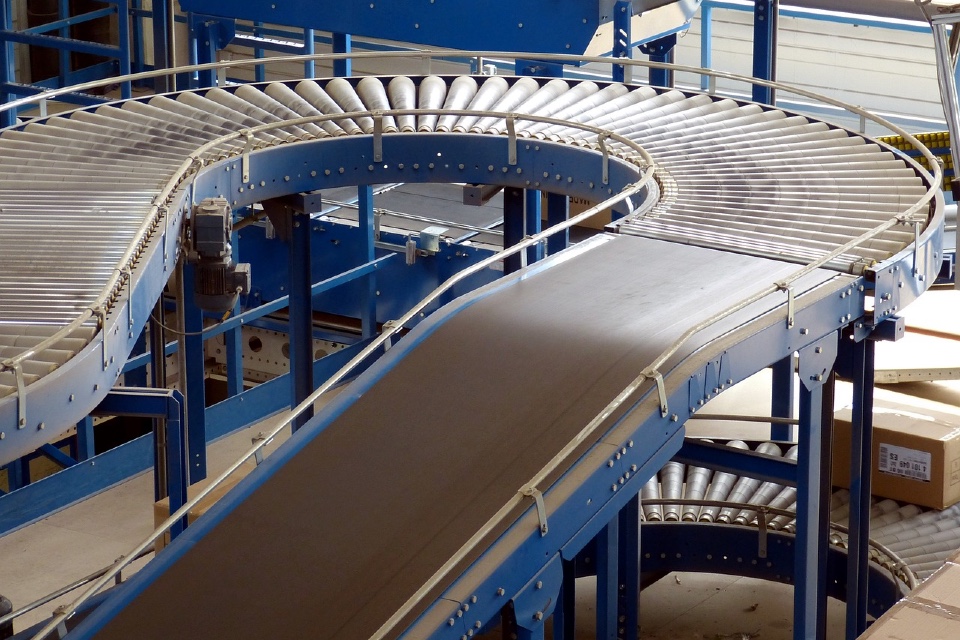
- Conveyor systems
- Robotic picking arms
- Sortation systems
- Automated packaging
- Barcode and RFID technologies
- Warehouse Management Systems (WMS)
The right combination depends on order profiles, product characteristics, available space and future growth plans.
Automation Insight
Automation projects are often most successful when implemented in phases. Introducing one technology at a time allows warehouse teams to adapt processes, measure improvements and minimise disruption.
Automated Warehouse Robots
Automated warehouse robots have become one of the fastest-growing areas of warehouse automation.
Rather than replacing entire warehouse operations, robots are increasingly deployed to support staff by transporting products, assisting with picking or moving pallets between locations.
Examples include:
- Autonomous Mobile Robots (AMRs)
- Automated Guided Vehicles (AGVs)
- Collaborative robots (cobots)
- Robotic palletisers
- Picking robots
- Inventory scanning robots
Unlike traditional fixed automation, many modern robotic systems can be expanded gradually as operational requirements change.
The UK Government has identified robotics and autonomous systems as important technologies supporting future industrial productivity through its wider innovation strategy.
Buyers should compare:
- Navigation technology
- Payload capacity
- Charging requirements
- Fleet management software
- Safety features
- Integration with existing warehouse systems
Automated Warehouse Solutions
Unlike traditional fixed automation, many modern robotic systems can be expanded gradually as operational requirements change.
The UK Government’s Innovation Strategy (https://www.gov.uk/government/collections/uk-innovation-strategy) identifies robotics and autonomous systems as technologies that will play an important role in improving productivity across UK industry.
Many organisations require broader automated warehouse solutions rather than standalone robotics.
Integrated automation may combine:
- Storage automation
- Conveyor systems
- Robotics
- Warehouse software
- Vision systems
- Quality control
- Packing automation
- Dispatch management
The objective is to create a connected operation where information flows seamlessly between equipment and software.
This allows managers to optimise workflows, identify bottlenecks and improve resource utilisation across the warehouse.
Think Beyond Equipment
Automation should improve operational performance, not simply introduce new technology. Buyers should evaluate how each solution supports measurable business objectives such as throughput, inventory accuracy or customer service.
Warehouse Management Automation
Effective warehouse management automation depends on intelligent software as much as physical equipment.
The UK Warehousing Association (UKWA) (https://www.ukwa.org.uk/) regularly highlights digital warehouse management systems as an important part of improving warehouse efficiency, inventory visibility and operational resilience.
Effective warehouse management automation depends on intelligent software as much as physical equipment.
The Warehouse Management System (WMS) often acts as the central control platform, coordinating inventory, orders and automation equipment.
A modern WMS may provide:
- Inventory visibility
- Task allocation
- Picking optimisation
- Labour management
- Slotting analysis
- Exception management
- Performance dashboards
- Integration with ERP systems
Without effective software integration, even sophisticated automation equipment may fail to deliver its full operational benefits.
Integration Across the Supply Chain
Warehouse automation rarely operates in isolation.
Most organisations require integration with:
- Enterprise Resource Planning (ERP)
- Transport Management Systems (TMS)
- Order Management Systems
- Inventory platforms
- Supplier portals
- Carrier software
- Business intelligence tools
Well-designed integration reduces manual data entry while improving visibility across the wider supply chain.
Buyers should understand how information flows between systems and whether suppliers provide standard APIs or require bespoke development.
Improving Throughput Without Increasing Labour
One of the principal reasons organisations invest in automation is to increase throughput without proportionally increasing labour costs.
Automation can help improve:
- Picking speed
- Inventory accuracy
- Space utilisation
- Order processing
- Vehicle loading
- Shift productivity
- Stock visibility
- Operational consistency
However, successful projects depend upon process redesign as well as new equipment.
The Chartered Institute of Logistics and Transport (CILT UK) (https://ciltuk.org.uk/) regularly identifies warehouse productivity, digitalisation and operational efficiency as key priorities for modern logistics organisations.
Measure Operational Outcomes
Rather than focusing solely on the number of robots or automated processes, buyers should ask suppliers how improvements will be measured after implementation.
Typical KPIs include:
- Orders processed per hour
- Pick accuracy
- Inventory accuracy
- Labour productivity
- Average fulfilment time
- Equipment utilisation
- Downtime
- Return on investment
Scalability and Future Growth
Warehouse requirements rarely remain static.
Automation systems should accommodate:
- Seasonal demand
- Business expansion
- New product ranges
- Additional warehouse locations
- Changes in order profiles
- Future technologies
Cloud-connected software platforms increasingly make it easier to scale automation without replacing existing investments.
Suppliers should explain how their solutions support future expansion and ongoing optimisation.
Questions to Ask Potential Suppliers
When comparing warehouse automation providers, consider asking:
- Which warehouse processes can your solution automate?
- How does the system integrate with our existing WMS or ERP?
- What implementation timescales should we expect?
- Can the solution be deployed in phases?
- How is system performance monitored?
- What reporting and analytics are included?
- How are maintenance and software updates managed?
- What staff training is provided?
- How does the system support seasonal demand?
- What return on investment have similar organisations achieved?
- What business continuity arrangements are included?
- How is cybersecurity managed across connected equipment?
Frequently Asked Questions
What is warehouse automation?
Warehouse automation uses software, robotics and automated equipment to improve inventory management, picking, storage and fulfilment processes.
What are automated warehouse robots?
They are robotic systems that perform warehouse tasks such as transporting goods, picking products, pallet handling and inventory scanning with minimal human intervention.
Do warehouse automation systems replace warehouse staff?
In most cases, automation supports employees by removing repetitive or physically demanding tasks while allowing staff to focus on higher-value operational activities.
What is warehouse management automation?
Warehouse management automation combines Warehouse Management Systems (WMS) with automated equipment to coordinate inventory, workflows and fulfilment activities.
Can automation improve warehouse throughput?
Yes. Well-designed automation can increase picking speed, improve inventory accuracy, reduce manual handling and optimise warehouse capacity.
Related Reading
Continue exploring logistics technology with these articles from Supply Chain Briefing:
- The Future of Warehousing: Automation, Robotics and Energy Efficiency
- The Steps to Deliver Warehouse Automation
- Automation, Robotics and Human-Machine Collaboration in Modern Fulfilment
Product Guide
Senior supply chain and logistics professionals attending the Total Supply Chain Summit can meet providers spanning logistics technology, fulfilment, automation, warehousing, consultancy and supply chain operations.
Featured Suppliers
Connected Load Carrier
Digital logistics provider focused on connecting shippers and carriers and improving the visibility and management of freight movements. Its solutions support greater collaboration and operational transparency across transport networks.
Website: www.connected-load-carrier.com
DP World
Global logistics provider operating across ports, terminals, freight forwarding, warehousing and end-to-end supply chain services, with digital capabilities designed to improve the movement and visibility of goods across international networks.
Website: www.dpworld.com
Fulfilmentcrowd
Technology-enabled fulfilment provider offering inventory, order and delivery management across a network of fulfilment centres. Its platform provides merchants with visibility over stock and fulfilment operations across multiple locations.
Website: https://www.fulfilmentcrowd.com/
GFS
Delivery technology and services provider helping retailers manage multiple carriers through a single platform, with capabilities spanning carrier selection, delivery management, tracking and post-purchase customer experience.
Website: www.gfsdeliver.com
Great Bear Distribution Ltd
UK logistics provider delivering warehousing, distribution and transport services across complex supply chain operations, supporting customers with scalable logistics infrastructure and operational management.
Website: www.greatbear.co.uk
GreyOrange
Warehouse automation and software specialist. Its GreyMatter platform orchestrates robotic systems, inventory and fulfilment processes to provide real-time operational decision-making within distribution environments.
Website: https://www.greyorange.com/greymatter/
ID8 Global LLC
Supply chain consultancy supporting organisations with strategy, transformation and operational improvement, helping businesses address complex procurement, logistics and supply chain performance challenges.
Website: https://www.id8-global.com/
Iron Mountain
Global information-management and logistics provider offering warehousing, asset management and logistics services alongside technology-enabled visibility and inventory-management capabilities.
Website: https://www.ironmountain.com/en-gb/services/warehousing-and-logistics
Kardex
Global provider of automated storage, retrieval and material-handling solutions, combining warehouse technology and software to improve inventory visibility, space utilisation and fulfilment performance.
Website: www.kardex.com
Miebach Consulting Ltd
International supply chain consultancy specialising in logistics strategy, network design, warehousing, automation and digital transformation, supporting organisations in the design and optimisation of end-to-end operations.
Website: https://www.miebach.com/uk/en
TranslogiX Limited
Logistics technology provider supporting transport and supply chain operations with digital systems designed to improve planning, management and operational visibility.
Website: www.translogix.co.uk
WTA Group
International logistics and supply chain provider offering freight forwarding and supply chain management services, with technology supporting shipment visibility and management across global movements.
Website: www.wtagroup.com
Explore Warehouse Automation Systems
Warehouse automation has become a strategic investment for organisations seeking greater resilience, higher productivity and improved customer service. The right combination of robotics, software and intelligent storage can help logistics teams improve efficiency today while preparing for future growth.
The Total Supply Chain Summit connects senior logistics and supply chain professionals with carefully selected providers of warehouse automation technologies through a programme of pre-arranged one-to-one meetings.
Explore warehouse automation systems, compare suppliers and discover solutions that can transform warehouse performance.
Sources
- Make UK – https://www.makeuk.org/
- UK Government – UK Innovation Strategy – https://www.gov.uk/government/collections/uk-innovation-strategy
- UK Warehousing Association (UKWA) – https://www.ukwa.org.uk/
- Chartered Institute of Logistics and Transport (CILT UK) – https://ciltuk.org.uk/
- British Standards Institution (BSI) – https://www.bsigroup.com/
Image credit: https://unsplash.com/photos/a-man-and-a-woman-in-a-warehouse-ZlOlRnWk8zU