


E-commerce growth is a warehouse challenge. It has evolved from a convenience channel into a major fulfilment challenge, according to GEBHARDT lntralogistics UK.
UK online retail sales reached £127.4 billion in 2024, up 3.4% on the previous year, and now account for roughly 27-28% of total retail spend. Driven by this sustained consumer shift, many brands are offering more: more sizes, morecolours, more categories, more delivery options and more returns choices.
Every new option creates another physical task. Once an order is placed, warehouses must locate, pick, pack and ship goods quickly, often while managing thousands of SKUs within tight delivery windows that tighten further duringpeaks. On Black Friday, online sales share regularly exceeds 32% of total retail. Warehouses must then balance availability, access and density – keeping stock easy to reach without overloading an already limited footprint.
Creating more space is not as simple as adding another aisle. Extra storage may increase capacity, but it can also lengthen picking routes. increase replenishment and make stock harder to control.
Managers need to consider how these changes affect speed, accuracy and future scalability.
That is the hidden cost of choice: every commercial decision to offer more options creates extra complexity behind the scenes. That is why automation becomes part of the conversation. As buying habits and product ranges become more complex, traditional material handling methods can become harder to scale.
Choosing the right automated solution starts with data, from order records and pick lists to WMS reports, ERP data, peak-season volumes, SKU count and load carrier type. Average daily volume alone rarely tells the full story, as short periods such as Black Friday, Christmas or promotional campaigns can place far greater pressure on the system.
Where relocation is not an option, automation suppliers often look at how to make better use of existing space.
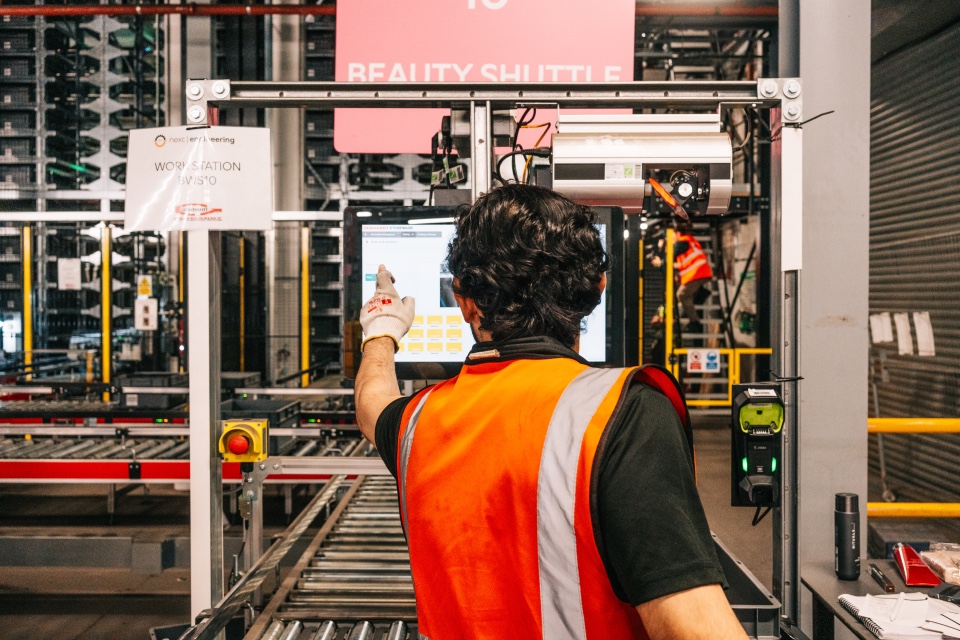
At NEXT in Rotherham, for example, GEBHARDT delivered a high-density automated storage solution for the retailer’s home and beauty operations, replacing largely manual processes that could no longer keep pace with rising order volumes.
The space assigned for the solution was long and narrow, measuring around 150 metres by 7.5 metres, with a height of 20 metres. To make the most of this footprint, the home system was stacked above the beauty system. In this case, the GEBHARDT StoreBiter OLS, a shuttle-based automated storage and retrieval
system, was the best fit due to its storage density, speed and ability to handle tote-based flows. The beauty zone now runs 56 OLS shuttles on a conveyor loop, while the home zone runs 42 shuttles with direct tote handling for faster throughput – both governed centrally by GEBHARDT’s StoreWare software, which manages tote movement, replenishment, batch picking and real-time updates to NEXT’s host system.
The result: significantly reduced manual handling, lower forklift traffic and energy consumption, and a system built to flex as NEXT’s product range and order volumes continue to grow.
Businesses should also invest for the future, not just the present. Modular automation can help avoid costly system replacements by adapting as product ranges, order volumes and fulfilment requirements change.
Behind every added choice is added operational complexity. The right automation helps warehouses control that pressure and scale reliably.
Because in e-commerce, choice only works if the warehouse can keep up.
Discover more at https://gb.gebhardt-group.com.
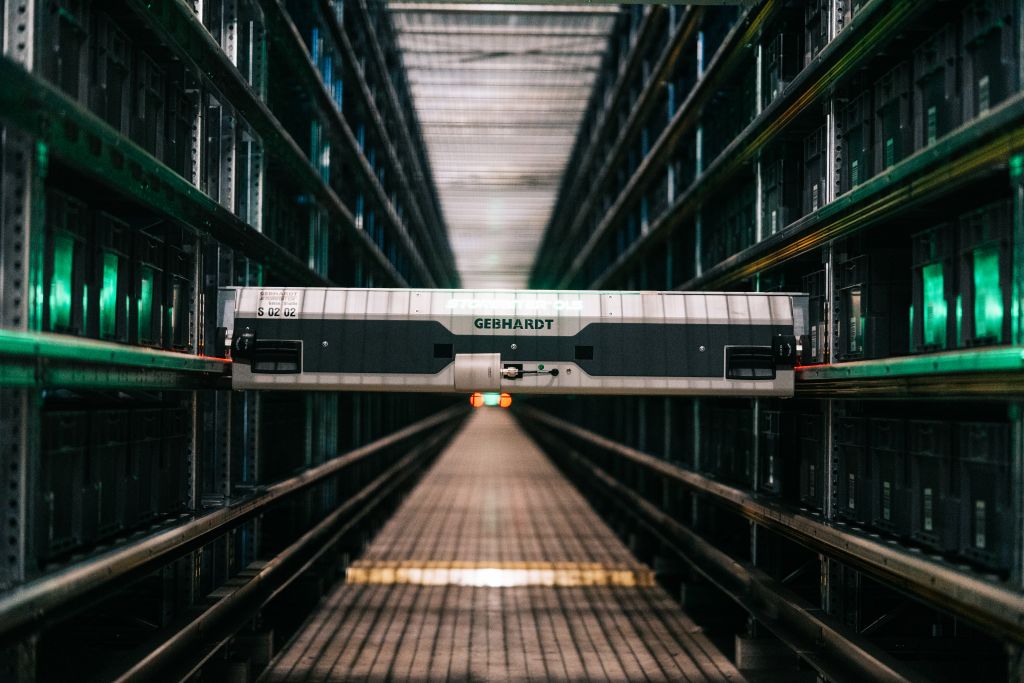
Image credit: GEBHARDT lntralogistics UK