


Every product moving through a supply chain has two fundamental requirements. It needs to arrive in the right condition. And everybody handling it needs to know what it is, where it belongs and potentially where it has been. That makes labelling and packaging much more than an end-of-line process.
Packaging protects products as they move between manufacturing, warehousing, transport and customers. Labelling provides the information that allows those products, cartons and pallets to be identified, scanned, routed and traced.
Get either wrong and the consequences can spread quickly.
Poor packaging can mean damaged products, unstable pallets, wasted materials and costly returns. Incorrect or unreadable labels can cause picking errors, rejected shipments, traceability problems and delays.
The procurement question should therefore not simply be:
“How much does our packaging cost?”
It should be:
“How effectively does our packaging and labelling support the movement of goods through the entire supply chain?”
At a Glance: What Labelling & Packaging Buyers Should Compare
| Area | What Supply Chain Teams Should Consider |
|---|---|
| Product protection | Weight, fragility, dimensions and environmental conditions |
| Packaging materials | Cardboard, film, paper, protective materials and alternatives |
| Packaging size | Product fit, void space and dimensional efficiency |
| Pallet stability | Wrapping, strapping and load security |
| Labelling | Accuracy, durability, positioning and readability |
| Barcodes | Standards, scan performance and data requirements |
| Coding | Batch, lot, expiry, serial and other variable information |
| Traceability | Product, case and pallet-level identification |
| Automation | Printing, application, packing and materials handling |
| Integration | ERP, WMS, MES, TMS and carrier systems |
| Sustainability | Material reduction, recyclability and reuse |
| Compliance | Packaging data, EPR and sector-specific requirements |
| Transport | Parcel, pallet and carrier requirements |
| Performance | Damage, waste, throughput, errors and total cost |
What Is Supply Chain Packaging?
Supply chain packaging includes the materials and processes used to protect, contain, consolidate and transport products.
It can operate at several levels.
Primary packaging
Packaging immediately surrounding the product.
Secondary packaging
Packaging grouping individual products, such as cartons or cases.
Tertiary packaging
Packaging used primarily for logistics, including pallets, stretch wrap and strapping.
The right solution depends heavily on what is being moved.
Fragile electronics, chilled food, automotive components and bulk industrial goods have very different requirements.
Castle Industrial Supplies, for example, provides products including cardboard, pallet wrap, strapping, protective materials, tapes and packaging machinery alongside load-stability testing.
Castle Industrial – https://castleindustrial.com/
The important point is that packaging should be designed around the whole journey, rather than simply the moment at which an item leaves the warehouse.
Start with the Product and Its Journey
Before comparing packaging materials, buyers should understand the conditions the product will experience.
Questions include:
- How fragile is it?
- How heavy is it?
- How valuable is it?
- Is it temperature sensitive?
- How many times will it be handled?
- Will it travel individually or on a pallet?
- How far will it travel?
- Which transport modes will be used?
- Will it encounter moisture or temperature variation?
- What does the customer expect on arrival?
A package that survives controlled pallet transport between distribution centres may perform very differently when handled repeatedly through a parcel network.
This leads to a useful procurement principle:
Design packaging for the journey, not simply the product.
Reduce Product Damage Without Over-Packaging
The obvious purpose of protective packaging is to prevent damage.
But simply adding more material is rarely the optimum solution.
Excessive packaging can increase:
- Material costs
- Parcel dimensions
- Transport costs
- Storage requirements
- Waste
- Environmental impact
Too little packaging creates a different cost through:
- Damaged goods
- Returns
- Replacements
- Customer complaints
- Additional transport
The objective is therefore right-sized protection.
Buyers may need to assess the combination of:
outer packaging + cushioning + void fill + sealing + palletisation
rather than evaluating each material independently.
Castle Industrial, for example, combines packaging products with load-stability audits and testing intended to identify how packaging configurations can be optimised while maintaining safe transportation.
Packaging Principle
The least packaging is not necessarily the most sustainable packaging if inadequate protection causes the product to be damaged and shipped again.
Pallet Load Stability
Packaging decisions continue after products enter cartons.
Palletised goods need to remain stable through:
- Warehouse movement
- Forklift handling
- Loading
- Road transport
- Unloading
Possible controls include:
- Stretch wrap
- Strapping
- Edge protection
- Anti-slip materials
- Pallet configuration
But more stretch film does not automatically create a more stable load.
The interaction between product weight, pallet pattern, packaging strength, wrapping configuration and transport conditions matters.
Castle Industrial’s load-stability services illustrate how testing can be used to optimise packaging configurations rather than relying on assumptions about film quantity.
The company cites a project with L’Oréal’s Trafford Park distribution centre where changes identified through packaging analysis reduced shrink-wrap use while maintaining operational requirements.
That points to a broader opportunity: better packaging engineering can sometimes improve protection, cost and sustainability simultaneously.
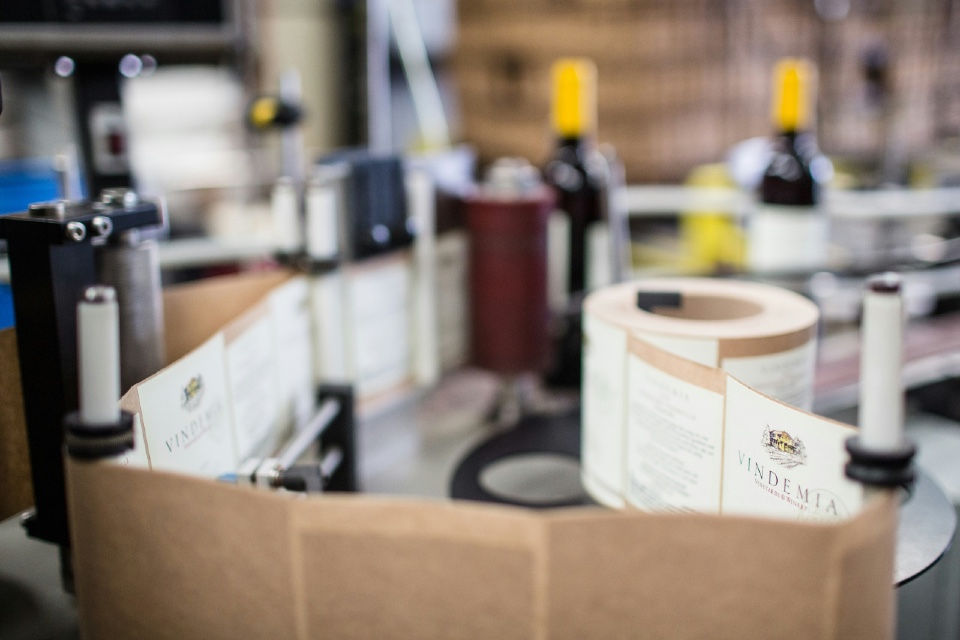
Labelling Connects Physical Goods with Supply Chain Data
If packaging protects the physical product, labelling connects that product to the information systems controlling its movement.
A supply chain label might contain:
- Product identifier
- Barcode
- Batch number
- Lot number
- Serial number
- Production date
- Expiry date
- Quantity
- Destination
- Handling instructions
- Carrier information
GS1 UK explains that barcodes provide a bridge between physical objects and electronic information, allowing products to be automatically identified and tracked as they move through supply chains.
GS1 UK – Standards That Capture – https://www.gs1uk.org/standards-services/standards/standards-that-capture
That makes labelling a data-quality issue as much as a printing issue.
Labelling Principle
A label is only useful if the information behind it is accurate.
Printing the wrong information perfectly still creates the wrong outcome.
Barcode Labelling and GS1 Standards
Barcodes allow supply-chain information to be captured automatically rather than entered manually.
Different identifiers and barcode formats serve different purposes.
For example, a Global Trade Item Number (GTIN) can identify a product, while the Serial Shipping Container Code (SSCC) uniquely identifies a logistics unit such as a pallet.
GS1 UK explains that logistics labels incorporating SSCCs provide a standard, internationally recognised method of identifying logistics units and can connect physical pallets with information exchanged electronically between trading partners.
GS1 UK – Creating SSCCs and Logistics Labels – https://www.gs1uk.org/knowledge-hub/barcodes/how-do-i-create-ssccs-and-logistics-labels
This can support:
- Receiving
- Put-away
- Inventory control
- Picking
- Dispatch
- Transportation
- Traceability
The same physical label can therefore participate in several processes.
Barcode Quality Matters
Having a barcode does not guarantee that it can be scanned reliably.
Performance can be affected by:
- Print quality
- Contrast
- Size
- Packaging material
- Label position
- Damage
- Curvature
- Wrinkles
GS1 UK recommends avoiding barcode placement across seams, folds, edges, perforations and other areas that can compromise scanning.
GS1 UK – Barcode Placement – https://www.gs1uk.org/knowledge-hub/barcodes/where-should-a-barcode-be-placed
For high-volume operations, even a relatively small percentage of unreadable labels can create significant manual intervention.
Workers may need to:
stop → inspect → re-enter → relabel → rescan
Those seconds accumulate across thousands of products or pallets.
Operational Insight
The cost of a label is measured in pennies.
The cost of a label that cannot be scanned may be measured in lost productivity.
Product Coding and Marking
Some supply chains need information printed directly onto products or packaging during production.
This might include:
- Batch numbers
- Dates
- Serial numbers
- Traceability codes
- 1D barcodes
- 2D codes
- QR codes
Markem-Imaje specialises in industrial coding and marking across packaging substrates and provides technologies including continuous inkjet, thermal transfer, laser and other printing systems.
Its CoLOS Packaging Intelligence software also connects coding with message management, verification, traceability and production systems.
Markem-Imaje – https://www.markem-imaje.com/
This illustrates how modern labelling increasingly extends beyond the physical printer.
The information may originate in:
ERP → MES → production system → coding equipment → packaging
Automating that flow can reduce manual data entry and the risk of the wrong information being applied to a product.
Labelling Automation Can Reduce Human Error
Manual label creation introduces opportunities for error.
An operator might select:
- Wrong product
- Wrong label template
- Wrong batch
- Wrong destination
- Wrong date
Centralised label and message management can instead connect printing to business systems.
Markem-Imaje’s line and data-management approach, for example, is designed to centralise packaging-line information and automate the distribution of marking and coding data.
Markem-Imaje – Line & Data Management – https://www.markem-imaje.com/solutions/packaging-intelligence/line-and-data-management
The principle applies beyond manufacturing.
Wherever possible:
system data should generate the label
rather than:
employee reads system data and manually recreates the label.
2D Barcodes and Richer Supply Chain Data
Traditional linear barcodes remain fundamental to supply chains, but 2D codes can carry considerably more information.
GS1 UK notes that Application Identifiers can encode information including:
- GTIN
- Batch or lot number
- Best-before date
- Expiration date
- Weight
within appropriate barcode formats.
GS1 UK – Encoding Production Data – https://www.gs1uk.org/knowledge-hub/barcodes/how-can-i-encode-production-data-eg-batch-dates-in-a-barcode
Markem-Imaje similarly highlights growing demand for 2D and QR coding across packaging as manufacturers seek greater traceability and richer product information.
This development creates opportunities for a single code to support more processes across:
manufacturing → warehousing → logistics → retail → consumer
But buyers need to ensure that scanners, software, trading partners and operational processes can actually use the additional data.
Traceability Through Packaging and Labelling
Traceability depends upon maintaining a reliable relationship between:
physical product ↔ identifier ↔ digital record
That relationship may need to continue across multiple packaging levels.
For example:
Item → case → pallet
Markem-Imaje’s traceability solutions can aggregate product coding information to case and pallet level, enabling outputs to be tracked across different stages of packaging.
Markem-Imaje – Traceability and Aggregation – https://www.markem-imaje.com/solutions/automation-and-integration/traceability
This can become particularly valuable where businesses need to identify:
- Which batch a product belongs to
- Which case contained it
- Which pallet carried that case
- Where the pallet was shipped
The quality of the underlying labelling and data therefore has direct consequences for recall management, compliance and supply-chain visibility.
Carrier Labelling and Multi-Carrier Shipping
The final label applied to a parcel may determine whether it successfully reaches its destination.
Carrier labels can contain:
- Destination
- Service
- Routing
- Tracking number
- Machine-readable barcode
For businesses using multiple carriers, managing different label requirements can become complex.
GFS provides multi-carrier delivery technology and services, with its platform generating compliant carrier labels across different delivery partners while providing unified tracking.
GFS – https://gfsdeliver.com/
This can be particularly important for retailers and fulfilment operations where carrier selection changes according to:
- Destination
- Delivery speed
- Parcel characteristics
- Cost
- Capacity
- Service availability
Rather than designing a fulfilment process around one carrier, multi-carrier technology can allow the appropriate shipping label to be generated after the carrier and service have been selected.
Packaging and Warehouse Automation
Packaging should also be considered as part of warehouse flow.
A packing station sitting at the end of a highly automated fulfilment operation can become a bottleneck if items arrive unpredictably or employees spend excessive time searching for packaging materials.
Kardex provides automated storage and materials-handling systems and offers solutions specifically around packing and shipping.
Its approach can use automated consolidation buffers to sequence goods and deliver complete orders to packing stations when required.
Kardex – Packing & Shipping – https://www.kardex.com/en-gb/solutions/warehouse-areas/packing-shipping
This illustrates an important point: Packing productivity begins before the product reaches the packing bench.
Warehouse layout, picking, consolidation, sequencing and packaging need to work together.
Design the Packing Station Around the Process
At the workstation itself, employees may need immediate access to:
- Boxes
- Mailers
- Tape
- Labels
- Printers
- Void fill
- Protective materials
Poor workstation design can result in repeated reaching, walking and searching.
Castle Industrial offers configurable packing stations alongside its wider packaging range, illustrating how physical workstation design can support packing productivity.
The ideal configuration depends on:
- Product range
- Order volumes
- Packaging variety
- Available space
- Automation
- Ergonomics
High-volume operations may also consider automated:
- Carton erection
- Right-sizing
- Sealing
- Labelling
- Pallet wrapping
The business case should consider labour, throughput, consistency and material efficiency rather than automation for its own sake.
Packaging Within Manufacturing and Supply Chain Execution
Packaging should not become an isolated stage between production and distribution.
Elisa Industriq provides manufacturing and supply-chain execution technology through its sedApta solutions, connecting areas including production, warehousing, transportation and order fulfilment.
Its work with food producer Auricchio has also included product marking and the generation and printing of labels across packaging areas.
Elisa Industriq – https://www.elisaindustriq.co.uk/
This demonstrates the wider opportunity to connect labelling and packaging information with manufacturing and supply-chain systems.
When production, warehouse and shipping data are aligned, businesses can reduce the need for disconnected manual processes at the end of the production line.
Packaging as a Value-Added Logistics Service
Not every business needs to perform all packaging and labelling internally. Third-party logistics and contract-logistics providers increasingly offer value-added services including:
- Packaging
- Repackaging
- Labelling
- Kitting
- Bundling
- Assembly
- Localisation
DP World, for example, provides packaging and labelling as part of its contract-logistics additional services, alongside activities including kitting, assembly, testing and personalisation.
DP World – https://www.dpworld.com/en/supply-chain-solutions/contract-logistics/additional-services
This can allow packaging to happen closer to the market or later in the supply chain.
A product could potentially move internationally in a relatively standard format before being:
configured → labelled → packaged → localised
closer to its final destination.
That can provide flexibility where products serve multiple markets or channels.
Sustainable Packaging: Use Less, but Use It Better
Sustainability has become a central packaging consideration.
Potential strategies include:
- Reducing material
- Right-sizing cartons
- Increasing recycled content
- Improving recyclability
- Reusing packaging
- Reducing plastic
- Eliminating unnecessary components
But packaging sustainability needs to be assessed across the supply chain.
A smaller package may:
- Use less material
- Occupy less warehouse space
- Fit more efficiently into vehicles
- Reduce transport requirements
Packaging optimisation can therefore create benefits beyond waste reduction.
However, buyers should avoid making material reduction the only objective.
If packaging fails and products are damaged, the environmental impact of replacement products and additional transport can outweigh the material saved.
Extended Producer Responsibility for Packaging
UK businesses should also understand how changing regulation affects packaging decisions.
Under Extended Producer Responsibility for packaging (EPR) organisations that supply or import packaging or packaged goods may have reporting, recycling and fee obligations depending on their activities and size.
The UK Government describes EPR as shifting the end-of-life cost of household packaging waste from taxpayers and local authorities towards producers, while creating incentives to reduce unnecessary packaging and improve recyclability.
Large obligated producers have requirements including packaging-data reporting, recycling obligations and waste-disposal fees.
GOV.UK – Extended Producer Responsibility for Packaging – https://www.gov.uk/government/collections/extended-producer-responsibility-for-packaging
PackUK also states that packaging fees are being modulated to provide stronger incentives for packaging that is easier to recycle.
PackUK – https://www.gov.uk/government/organisations/packuk/about
This means packaging design increasingly has potential consequences for both sustainability performance and cost.
Buyer Tip
Packaging procurement should therefore involve the sustainability and compliance functions where appropriate, rather than being treated solely as an operational purchasing decision.
Packaging Data Is Becoming More Important
EPR also highlights a less visible requirement: businesses increasingly need accurate data about the packaging they use.
Depending on their obligations, organisations may need information covering areas such as:
- Material
- Weight
- Packaging type
- Use
- Market destination
That makes packaging-data quality another procurement consideration.
Can suppliers provide reliable material specifications?
Can packaging consumption be measured?
Can information be connected to product or purchasing data?
The future of packaging management is likely to involve managing information about packaging almost as carefully as the physical materials themselves.
Packaging Performance Should Be Measured
Packaging procurement can easily become dominated by unit price.
A box costing 5p less appears attractive.
But what if it:
- Takes longer to assemble?
- Requires additional void fill?
- Causes more damage?
- Occupies more warehouse space?
- Increases shipping costs?
Supply-chain teams should consider broader metrics such as:
Cost per shipment
Total packaging materials used.
Damage rate
Products damaged during handling or transportation.
Packaging time
Labour required to prepare each order.
Material consumption
Weight and quantity of packaging used.
Parcel cube
How efficiently packaging uses available volume.
Label accuracy
Percentage of correctly labelled shipments.
Scan rate
Percentage of barcodes successfully read first time.
Throughput
Orders packed per hour.
Returns
Packaging-related returns or customer complaints.
This shifts procurement from:
“Which packaging is cheapest?“
to:
“Which packaging process creates the lowest total cost?“
Integrating Labelling with ERP, WMS and TMS
Labelling increasingly sits at the intersection of multiple enterprise systems.
For example:
ERP
holds product and customer information.
WMS
controls inventory and warehouse movement.
MES
controls manufacturing information.
TMS
controls transportation and carrier selection.
The label may need information from several of these.
Integration can reduce manual intervention and help ensure the physical label reflects the latest system data.
Buyers should therefore consider:
- APIs
- Data formats
- Printer compatibility
- Existing systems
- Master data
- Carrier integrations
The objective should be a reliable flow of information from business system to physical product.
Build Resilience into Labelling and Packaging
Labelling can become operationally critical.
If printers fail and no labels can be generated, shipments may stop.
Packaging shortages can have similar consequences.
Buyers should consider:
- Printer redundancy
- Spare equipment
- Consumable availability
- Maintenance
- Supplier lead times
- Alternative materials
- Multiple supply sources
- Business continuity
A relatively inexpensive consumable can halt an expensive operation if it is unavailable at the wrong moment.
Critical packaging and labelling supplies should therefore be considered within wider supply-chain resilience planning.
What Should Labelling & Packaging Buyers Compare?
Protection
Will the packaging protect the product throughout its actual journey?
Material efficiency
Is unnecessary material or empty space being used?
Load stability
Are palletised goods appropriately secured?
Labelling accuracy
Can the correct information be generated automatically?
Scan performance
Will barcodes remain readable throughout the journey?
Traceability
Can products be identified at item, case and pallet level where required?
Automation
Which repetitive packaging and labelling tasks can be automated?
Integration
Can equipment connect to ERP, WMS, MES, TMS and carrier platforms?
Sustainability
Can material use, waste and transport inefficiency be reduced?
Compliance
Does packaging support relevant regulatory and customer requirements?
Resilience
What happens if equipment fails or materials become unavailable?
Total cost
What is the complete operational cost rather than simply the purchase price?
Questions to Ask Labelling & Packaging Suppliers
- How will you assess our existing packaging and labelling processes?
- How do you determine the appropriate packaging for different products?
- Can you help reduce packaging material without increasing damage?
- How do you test pallet and load stability?
- Which sustainable packaging alternatives are available?
- Can you provide packaging-material and weight data?
- How will your solution affect packing speed?
- Which labelling and coding technologies do you support?
- Can you support GS1 standards?
- How do you verify barcode print quality and readability?
- Can labels include variable information such as batch, lot and expiry data?
- Can you support 2D barcodes and QR codes?
- How is labelling information controlled to reduce human error?
- Can the solution integrate with our ERP, WMS, MES or TMS?
- Can you support product, case and pallet traceability?
- What packaging automation is available?
- How scalable is the solution during peak periods?
- What maintenance and technical support are provided?
- How do you provide resilience if equipment fails?
- How should we measure return on investment?
Frequently Asked Questions
What is supply chain packaging?
Supply chain packaging includes materials and processes used to contain, protect, consolidate, store and transport products through manufacturing, warehousing and logistics.
What is supply chain labelling?
Supply chain labelling identifies products, cartons, pallets and shipments so they can be scanned, tracked, routed and processed through physical and digital supply-chain systems.
What is an SSCC?
A Serial Shipping Container Code is a GS1 identifier used to uniquely identify logistics units such as pallets. It can connect the physical unit with information exchanged electronically between trading partners.
Why is barcode quality important?
Poorly printed, damaged or incorrectly positioned barcodes may fail to scan, creating manual work, delays and potentially errors throughout warehousing and distribution.
How can packaging costs be reduced?
Potential approaches include right-sizing, reducing unnecessary materials, improving pallet stability, automating packing processes and analysing total cost rather than packaging unit price alone.
What is sustainable packaging?
Sustainable packaging seeks to reduce environmental impact through approaches including material reduction, recyclability, recycled content, reuse and improved logistics efficiency while continuing to protect the product effectively.
What is EPR for packaging?
Extended Producer Responsibility for packaging is the UK’s regulatory framework that places packaging obligations on certain organisations supplying or importing packaging or packaged goods, including reporting and, for relevant producers, recycling and waste-disposal requirements.
Product Guide
The Labelling & Packaging market spans physical packaging, coding and marking, warehouse automation, carrier labelling and broader supply-chain technology and services. Buyers should consider which part of the packaging journey they need to improve before comparing providers. These suppliers are all attending the Total Supply Chain Summit:
Featured Suppliers
Elisa Industriq UK
Operational intelligence and supply-chain technology provider offering solutions spanning manufacturing planning, execution, warehousing and transportation. Through its sedApta capabilities, Elisa Industriq can connect production and supply-chain processes, while customer applications include product marking and label generation within packaging operations.
Website: https://elisaindustriq.co.uk/
GFS
Delivery technology and services specialist supporting multi-carrier ecommerce and parcel operations. Its technology can generate compliant labels across different carriers while bringing carrier selection, shipping and tracking into a more unified fulfilment process.
Website: https://gfsdeliver.com/
IWS Group
Industrial and workplace solutions group supporting warehouse, logistics and operational environments. Its portfolio of specialist businesses provides products and services across areas relevant to safe and efficient warehouse and supply-chain operations.
Website: https://iws.group/
Kardex
Provider of automated storage, retrieval and materials-handling systems. Its packing and shipping solutions can support order consolidation, sequencing and just-in-time delivery of items to packing operations, helping businesses improve space utilisation and throughput.
Website: https://www.kardex.com/en-gb/
Markem-Imaje Ltd
Industrial coding, marking and packaging-intelligence specialist offering technologies for applying variable information to products and packaging. Its portfolio includes printing and coding equipment alongside software supporting message management, verification, line control, traceability and aggregation.
Website: https://www.markem-imaje.com/
Castle Industrial Supplies Ltd
UK packaging supplier providing products including pallet wrap, cardboard, tapes, protective packaging, strapping and packaging machinery. It also provides packing stations and load-stability testing designed to help businesses optimise packaging configurations, material use and pallet performance.
Website: https://castleindustrial.com/
DP World
Global supply-chain and logistics provider offering warehousing, transportation and contract-logistics services. Its value-added logistics capabilities include packaging, repackaging, product labelling, kitting, assembly, personalisation and localisation.
Website: https://www.dpworld.com/en
Better Packaging Is a Supply Chain Decision
Packaging may be one of the last processes performed before a product leaves a warehouse or factory.
But it should not be one of the last things considered when designing the supply chain.
Its influence extends into:
manufacturing → storage → picking → packing → transportation → delivery → returns
Labelling has an equally important role because it connects those physical movements with the digital information required to manage them.
The strongest procurement strategies therefore consider the two together.
The right packaging protects the product.
The right labelling protects the flow of information around it.
And when packaging materials, identifiers, data, warehouse processes and transportation requirements work together, organisations can improve protection, traceability, productivity and sustainability at the same time.
The Total Supply Chain Summit connects senior supply-chain and logistics professionals with specialist suppliers across labelling, packaging, warehousing, transportation, automation and wider supply-chain technology through a programme of pre-arranged one-to-one meetings.
Explore labelling and packaging solutions, compare specialist providers and discover opportunities to improve how products are protected, identified and moved throughout the supply chain.
Sources
- GOV.UK – Extended Producer Responsibility for Packaging – https://www.gov.uk/government/collections/extended-producer-responsibility-for-packaging
- GOV.UK – Check if you must comply with EPR for packaging – https://www.gov.uk/guidance/check-if-you-must-comply-with-epr-for-packaging–2
- PackUK – https://www.gov.uk/government/organisations/packuk/about
- GS1 UK – Standards That Capture – https://www.gs1uk.org/standards-services/standards/standards-that-capture
- GS1 UK – Creating SSCCs and Logistics Labels – https://www.gs1uk.org/knowledge-hub/barcodes/how-do-i-create-ssccs-and-logistics-labels
- GS1 UK – Barcode Placement – https://www.gs1uk.org/knowledge-hub/barcodes/where-should-a-barcode-be-placed
- GS1 UK – Encoding Production Data in Barcodes – https://www.gs1uk.org/knowledge-hub/barcodes/how-can-i-encode-production-data-eg-batch-dates-in-a-barcode
- Elisa Industriq – https://www.elisaindustriq.com/
- GFS – https://gfsdeliver.com/
- IWS Group – https://iws.group/
- Kardex – Packing & Shipping – https://www.kardex.com/en-gb/solutions/warehouse-areas/packing-shipping
- Markem-Imaje – https://www.markem-imaje.com/
- Markem-Imaje – Traceability & Aggregation – https://www.markem-imaje.com/solutions/automation-and-integration/traceability
- Markem-Imaje – Line & Data Management – https://www.markem-imaje.com/solutions/packaging-intelligence/line-and-data-management
- Castle Industrial – https://castleindustrial.com/
- DP World – Additional Logistics Services – https://www.dpworld.com/en/supply-chain-solutions/contract-logistics/additional-services
Image credit: https://unsplash.com/photos/red-and-white-plastic-bottle-on-brown-cardboard-box-fl8gBcnfWJU