


Volatile demand patterns, geopolitical disruption, rising transportation costs and evolving customer expectations are placing increasing pressure on operational resilience. At the same time, organisations attending the Total Supply Chain Summit are expected to maintain product availability, reduce inventory costs and improve fulfilment performance across increasingly fragmented supply chain networks…
As a result, many businesses are investing in data-driven supply chain platforms designed to improve visibility, coordination and real-time decision-making across planning, inventory and fulfilment operations.
The focus is shifting from isolated operational systems towards more connected, intelligence-led supply chain ecosystems.
The Challenge of Fragmented Supply Chain Operations
One of the biggest challenges facing multi-site operations is disconnected data. Many retailers and manufacturers still rely on separate systems for demand planning, warehouse management, transport logistics, procurement and store or production operations. This fragmentation can create delays, inventory imbalances and limited visibility into emerging supply chain risks.
For retailers, this may result in inconsistent stock availability across stores, delayed replenishment or inefficient fulfilment decisions. Manufacturers face similar challenges around raw material availability, production scheduling and supplier coordination.
Without integrated visibility, organisations often struggle to respond quickly when disruption occurs.
Control Towers and Real-Time Supply Chain Visibility
To address this, many organisations are deploying supply chain control tower platforms that consolidate operational data into centralised dashboards.
These platforms combine information from multiple systems and suppliers to provide real-time visibility into inventory levels, shipments, supplier performance and fulfilment activity across the wider supply chain network.
For multi-site organisations, this can help operational teams:
- identify supply chain bottlenecks earlier;
- monitor inventory movement across locations;
- improve replenishment accuracy;
- coordinate fulfilment more efficiently; and
- respond faster to disruption events.
Increasingly, AI and predictive analytics are also being used to identify emerging risks and recommend operational adjustments automatically.
AI and Automation Are Reshaping Supply Chain Planning
Artificial intelligence is becoming a growing focus within supply chain orchestration strategies.
Retailers are using AI-driven forecasting tools to improve demand planning accuracy and reduce excess stock, while manufacturers are deploying predictive analytics to optimise production scheduling and supplier management.
Automation is also improving operational responsiveness across warehousing and fulfilment environments. Some organisations are using intelligent orchestration platforms to dynamically reroute inventory, prioritise orders or adjust fulfilment workflows based on real-time operational conditions.
However, data quality remains a critical issue. AI-driven decision-making is only as effective as the operational data feeding these systems, making integration and governance increasingly important.
Cloud Platforms and Integration Challenges
Cloud-based supply chain platforms are enabling greater scalability and operational flexibility, particularly for organisations managing multiple sites, suppliers and distribution networks.
However, integration remains one of the biggest implementation challenges.
Legacy ERP systems, inconsistent supplier data and fragmented operational platforms can limit visibility and reduce the effectiveness of orchestration technologies. Many organisations also face challenges around standardising data across multiple business units or acquired operations.
As a result, organisations are increasingly prioritising suppliers that can demonstrate:
- strong API integration capabilities;
- interoperability with existing ERP and warehouse systems;
- scalable analytics and reporting tools;
- AI-enabled forecasting functionality;
- multi-site operational visibility; and
- robust cybersecurity protections.
Supply Chains Are Becoming More Intelligent and Adaptive
Looking ahead, supply chain management is becoming increasingly real-time, connected and predictive.
For both retailers and manufacturers, the ability to respond quickly to disruption while maintaining operational efficiency will become a major competitive differentiator.
As operational complexity continues to grow, organisations are likely to place even greater emphasis on integrated supply chain ecosystems capable of connecting planning, inventory and fulfilment into a more intelligent and coordinated operational model.
For supply chain leaders, the priority is building resilient, data-driven operations capable of adapting continuously to changing market conditions.
Are you searching for End-to-End supply chain solutions for your organisation? The Total Supply Chain Summit can help!
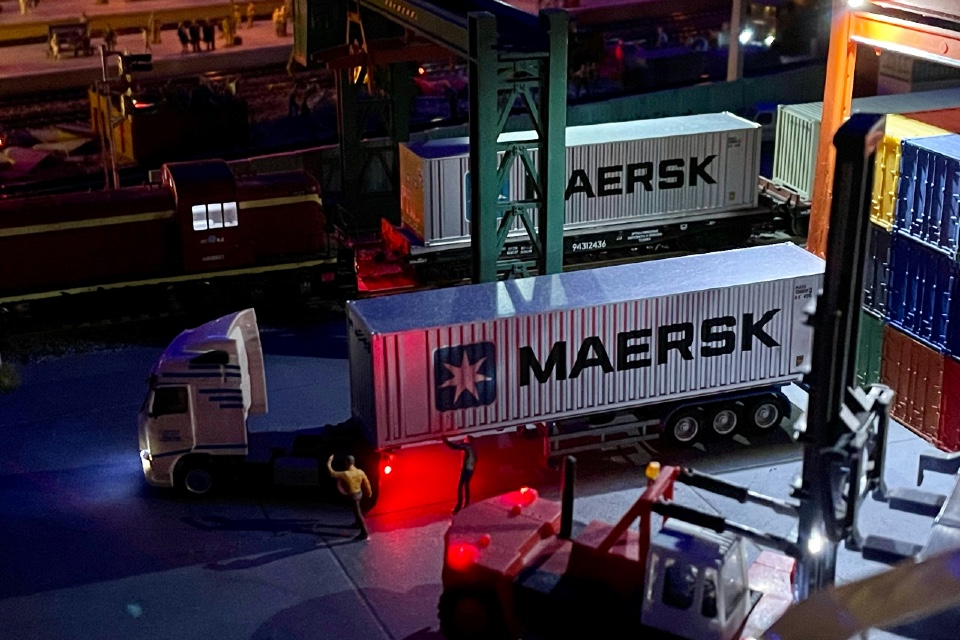
Photo by Jakub Żerdzicki on Unsplash