


For public sector organisations and critical infrastructure operators, supply chain resilience is a strategic priority. From healthcare and utilities to transport and defence, recent years have exposed how vulnerable essential services can be to geopolitical disruption, labour shortages, inflation and supplier instability. Attention is shifting from efficiency-led models to flexible, end-to-end supply chain solutions designed to adapt under pressure.
The challenge of critical supply chains
Unlike many commercial environments, public sector and critical infrastructure supply chains must prioritise continuity, reliability and public service delivery above all else.
Disruption can have serious operational consequences, from delayed medical supplies and infrastructure maintenance to shortages of critical equipment or fuel. At the same time, these organisations often operate within:
- Tight budget constraints
- Complex procurement frameworks
- Legacy systems and fragmented supplier networks
This makes agility more difficult to achieve.
Moving from linear to connected supply chains
Traditional supply chains have often been managed in siloes, with procurement, logistics, inventory and operations operating separately. This limits visibility and slows decision-making during disruption.
Leading organisations are now investing in integrated, end-to-end supply chain platforms that connect planning, sourcing, warehousing, transport and supplier management into a unified ecosystem. This enables:
- Real-time visibility across suppliers and inventory
- Faster identification of risks and bottlenecks
- More coordinated responses to disruption
Building flexibility into operations
Future-ready supply chains are designed to adapt. For public sector and infrastructure organisations, this includes:
- Diversifying suppliers to reduce dependency on single regions or vendors
- Building contingency plans for critical goods and services
- Increasing buffer stock for high-risk or essential items
- Using dynamic routing and logistics planning tools
The goal is not simply efficiency, but operational resilience.
The role of data and predictive insight
AI, analytics and supply chain ‘control towers’ are becoming increasingly important in supporting proactive decision-making.
These tools allow organisations to:
- Monitor supplier performance in real time
- Predict shortages or delays before they escalate
- Model the impact of different disruption scenarios
For critical infrastructure, this predictive capability is particularly valuable in maintaining service continuity.
Working with the right partners
Given the complexity of public sector supply chains, selecting the right partners is essential. Organisations should prioritise suppliers that offer:
- Strong integration capabilities across systems and stakeholders
- Proven resilience and business continuity processes
- Transparency across sourcing and logistics operations
- Experience in regulated or high-criticality environments
Long-term partnerships and collaborative planning are increasingly important to ensure adaptability during periods of disruption.
Designing for uncertainty
For supply chain leaders, uncertainty is essentially an operating environment. By investing in flexible, connected and data-driven end-to-end solutions, public sector and critical infrastructure organisations can build supply chains that are not only more efficient, but significantly more resilient.
In an era of ongoing volatility, the ability to adapt quickly may become the most valuable capability of all.
Are you searching for End-to-End supply chain solutions for your organisation? The Total Supply Chain Summit can help!
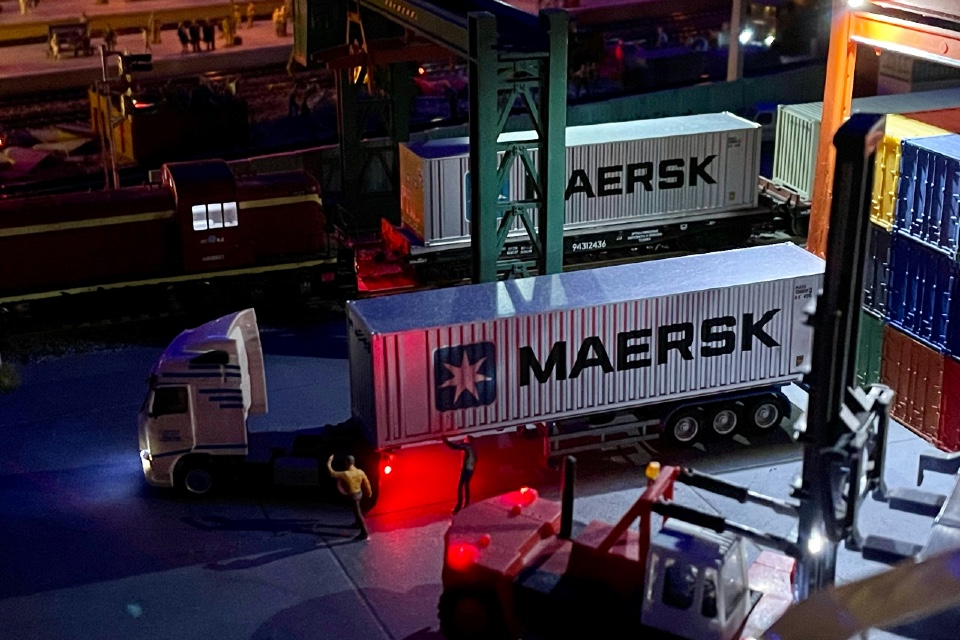
Photo by TheStandingDesk on Unsplash